President Donald Trump

I assume it's still acceptable to have a Trump thread in a Politics forum?
So this is an obvious lie - basically aimed at
I have no issue with you not seeing it the same way. The problem was your nonsense logic about the way i see it
Anyway moving to extremists. I generally mean those opposed to an inclusive well functioning democracy.
An internal critique doesn’t have to be exclusive of things that you profess to believe, it just has to show that the entailment of your belief is something contradictory or otherwise undesirable.
As for your definition of extremism, I’m not sure I’ve ever heard that definition before. It would seem to imply that radical liberals that violently rise up against an authoritarian state would not be extremists, even if their position is extreme in the context of their society.

Your entailment was nonsense though. It wasn' to do with my beliefs. I happy to talk abour our views however different but have no interest in the silly stuff - especially when dressed up as logic.
My view of extremism is indeed in the context of our democracies. Id like to keep them. I assume you would too.
Fair enough, I retracted it already because I just think that it was counterproductive to bring up but I’m happy to just say it was a bad argument because I have no interest in defending it for long periods of time. It was my attempt to show that you should reject that closer preference voting doesn’t actually lead to extremism, because I was hoping you would reject premise 1 of the argument upon reflection that premise 2 is true. But actually it would just lead you to rejecting premise 2, which doesn’t actually get any concession from you and just leads to a debate about extremism.
And yes, extremism in the context of democracies could entail an “inclusive, well functioning democracy”. I’d also add that denying the need for a market-based economy would be extreme. Seems like institutions like the Fed, the stock market, exchange of goods through regulated enterprise, are pretty universal features of most Western democracies.
I don’t consider social democratic reforms to be extreme but I would consider the goal of transferring the means of production to the proletariat to be extreme. Just contextually.
I rejected your premise 1) simply because it was incorrect. Rejecting it didn't touch my argument because your premise 1) wasn't part of my argument.
Re extremism. I'm an extremist to an extent in your view on a market economy. Unfortuantely my view is that least worst will result in both our views of extemism being met for much the same reason and at much the same time.
I rejected your premise 1) simply because it was incorrect. Rejecting it didn't touch my argument because your premise 1) wasn't part of my argument.
Then I must have misunderstood what you meant by lesser evil voting leads to extremism.
Re extremism. I'm an extremist to an extent in your view on a market economy. Unfortuantely my view is that least worst will result in both our views of extemism being met for much the same reason and at much the same time.
What part of my view of extremism do you think is promoted by just voting for the ones closest to your preferences? I mean in my view they’re not connected, because my view of closest preference voting could also be used when the two choices you have are both some of the worst possible choices imaginable, so long as one is marginally better than the other.
I mean if you could vote between someone who will kill 6 million people, and someone who would kill 6.5 million people, doesn’t it just make sense to vote for the one that will kill 6 million?
You don’t even have to tell anyone you’re going to do it or advocate for it publicly in any way. Just those two choices alone in a vacuum it makes sense to vote for the one that will cause the least damage.
Then I must have misunderstood what you meant by lesser evil voting leads to extremism.
Your argument was either invalid or your p1) was that all extremists gain from least worst. I'm assuming you argument was valid and I do not claim that all extremist will gain from least worst. I'm claiming that those who gain from least worst will be extremists.
What part of my view of extremism do you think is promoted by just voting for the ones closest to your preferences? I mean in my view they’re not connected, because my view of closest preference voting could also be used when the two choices you have are both some of the worst possible choices imaginable, so long as one is marginally better than the other.
If democracy was a one off vote then maybe. It isn't it's a system that adapts - adaptation was where this part of the thread started.
Extremism is promoted because of taking worst steps and least worst steps when we need to have good steps. Can only fade this for so long.
I mean if you could vote between someone who will kill 6 million people, and someone who would kill 6.5 million people, doesn’t it just make sense to vote for the one that will kill 6 million?
You don’t even have to tell anyone you’re going to do it or advocate for it publicly in any way. Just those two choices alone in a vacuum it makes sense to vote for the one that will cause the least damage.
You're still considering a one off vote rather than a system that adapts. I also think we've lost by then and I very much hope I'd be strongly opposing both.
All that I need for the argument to get off the ground is that there are two possible choices and choosing one over the other would be preferable. You could secretly vote for the better option and never let your choice be known.
And anyway, if you advocate for not voting for the better option publicly, you are actually helping the worse option. So even if you refuse to choose between worse and less worse on the basis of both being bad, you are effectively helping the worse get elected over the better.
I’m just not understanding how (in the example given) it would make sense to do anything to help the extra 500k people get killed.
The system still adapts to votes. Assuming we somehow still have a fucntioning democratic system which seems pretty unlikely at this point.
There are other reasons why i'm not supporting a mass murderer but until you're considering an adaptive system we're not even having the same conversation.
I feel like you’re not really thinking of the hypothetical on its own terms and instead trying to predict what the point of the hypothetical is. Like ok I could just grant for the sake of the dialectic that it’s not analogous to real life, but wouldn’t we still want to say that the clear answer is to save 500k lives if the choice really was that simple?
This rather childish game has been played many times. Let me save you some time.
There is probably no action however horrific where you couldn't create a hypothetical where it has to be done. Thinking this wins some argument is a mistake
and maybe this will help. As I said earlier
If people want to argue the benefit of voting least worst over putting pressure on parties to adapt then they are free to so. Sometimes I'd agree but in general it means the extremists will win - as you say 'duh'
So I'm not even arguing we should never vote least worst.
This rather childish game has been played many times. Let me save you some time.
There is probably no action however horrific where you couldn't create a hypothetical where it has to be done. Thinking this wins some argument is a mistake
I don’t see what’s childish about putting our moral intuitions to the test with hypothetical scenarios. It’s not like there aren’t situations in life that have us choosing between two or more unpleasant options, so it can’t just be that the options in the hypothetical make you uncomfortable as an objection.
It's where you start when youre young and it's always the same. It's an important part of early thinking
My argument doesn't extend to extreme cases so what might happen in extreme hypotheicals doesn't imply anything about real situations.
Are you saying that professional philosophers who take hypotheticals seriously (I'm guessing the vast majority given that there are a few included on the philpapers survey) are making a grave error in reasoning? And if so, where exactly are they going wrong?
Hypothetical can be very interesting and important.
The ' here's a hypothetical where you would have to do something you think is wrong' can be a bit useful. It introduces a basic theory of morality. I don't think it's filling many advanced philosophy papers.
In politcs it's usually used to ignore the argument or score silly points. Have you even grasped that the argument you are supposedly addressing doesn't apply to far less than extreme hypotheicals. I'd try to save you some time by telling you that all my views allow for where they break down in extreme (or in this case not extreme), situations.
If you want to address the practical adapative argument then perhaps afterwards we could move on to the moral argument. I think the morality of democrcay is very importnat and interesting but here we're not arguing the pros/cons of democracy. This is a practical argumetn about how to avoid it collapsing into extremism.
Hypothetical can be very interesting and important.The ' here's a hypothetical where you would have to do something you think is wrong' can be a bit useful. It introduces a basic theory of morality. I don't think it's filling many advanced philosophy papers.In politcs it's usually used to ignore the argument or score silly points. Have you even grasped that the argument you ar
My example involved the death of 500k people. In real life, this study estimates that 14 million lives may be lost by 2030 due to the defunding and dissolution of USAID:
Study variables
The main dependent variable in the analysis was age-standardised all-cause mortality (ASMR) per 1000 inhabitants. In addition, mortality was examined across different age groups, including child mortality (children younger than 5 years per 1000 live births). Given that USAID interventions are expected to have the greatest effect on children, we further disaggregated under-five mortality into specific age categories: infancy (0–1 year), preschool (2–4 years), child (younger than 5 years), and school age (5–9 years). To assess cause-specific associations, we also selected a set of mortality categories linked to USAID priorities and poverty-related conditions on the basis of existing literature.12–19 These associations were defined using the International Classification of Diseases, 10th revision (ICD-10), and included tuberculosis (A15–A19 and B90), HIV/AIDS (B20–B24), maternal causes (O00–O99), lower respiratory infections (J09–J22, P23, and U04), malnutrition (E00–E02, E40–E46, E50, D50–D53, D64.9, and E51–E64), diarrhoeal diseases (A00, A01, A03, A04, and A06–A09), malaria (B50–B54, P37.3, and P37.4), and neglected tropical diseases (A66, A67, A69.1, A71, A77, A78, A79, B55–B56, B57, B65, B66, B73–B74, B76–B77, B79, B83, B88.0, B88.1, and B88). Lastly, specific injury-related mortality (V01–Y89, excluding X41–X42, X44–X45, and U12.9) was included as a negative control, as in previous studies.20

If I wanted to be extreme, I would have said that one choice will kill one person while the other choice will kill all sentient life in the universe. I think my example is pretty representative of the choice that leftists think they are making, rather than trying to make it as obscene as possible for the sake of the argument. Yes, there are huge moral stakes involved in selecting the president of the United States.
My example involved the death of 500k people. In real life, this study estimates that 14 million lives may be lost by 2030 due to the defunding and dissolution of USAID:
If I wanted to be extreme, I would have said that one choice will kill one person while the other choice will kithis is interesting, because it implies a lot of things you don't seem to consider.
if you use that "study" (hint , it's not a study: it's a prediction model) to claim that trump possibly caused 14m deaths, we have enormous problems.
because the corollary is that previous presidents literally assassinated every single human being they didn't save with american taxpayers money.
which is such a grotesque, absurd way to frame reality it's hard to have a conversation about it.
the idea that if you could save a life but you don't then you are killing it is put of whack banana extremism.
you won't use it with normal people, or other governmens.
you would NOT claim someone who buys a new car is killing people because the same money used to donate to poor africans would have saved lives. Do you?
and how can you claim the USA (so trump) kills 14m people disregarding that all other governments in the world (including those that govern over those people!!!!) refuse to step in instead?
why do you frame it as uniquely a responsibility of the American government to spend money to save foreign aliens?
My example involved the death of 500k people. In real life, this study estimates that 14 million lives may be lost by 2030 due to the defunding and dissolution of USAID:
If I wanted to be extreme, I would have said that one choice will kill one person while the other choice will kilots of assumptions but if you're now trying to make it real politics then how many deaths will there be if the system doesn't adapt to making good decisions rather than least worst ones alternatiing with the even worse lot?
and how many deaths will be caused by a collapse into extremism (by whatever definition)?
this is interesting, because it implies a lot of things you don't seem to consider.if you use that "study" (hint , it's not a study: it's a prediction model) to claim that trump possibly caused 14m deaths, we have enormous problems.because the corollary is that previous presidents literally assassinated every single human being they didn't save with american taxpayers money.whi
It’s a fair line of inquiry. I would say there’s a big difference between not spending money that could be used elsewhere and redirecting funds that were already approved and being used for a certain purpose.
Let’s say you decide as a country you want to use x amount of money to save y lives, by whatever methodology. By making the choice to stop using x money after already allocating it, you are making a much different choice than to never allocate the money at all.
It’s like switching tracks in the trolley problem and then switching it back to killing five people again, except in this case you never had to kill the one person you just had to spend some money.
Furthermore the money spent is some of the most efficient money that can be spent. There’s no way that money can be redirected into the US to save a similar number of lives.
Also, I never claimed that Trump murdered anyone (as is the implication of your use of the word “assassinated”). Murder would imply that there is something illegal or inherently immoral about it. That’s a political debate. I’m just pointing out that with a values system that sees life as equal, it might bother you that x amount of people died because of who was voted in as president. This isn’t anything foreign to conservatives either. Conservatives might claim that Trump is more anti-war so he might save more lives compared to Clinton, Biden, or Harris. Why do they get to claim the saved lives of people who aren’t American but not vice versa?
Also I frame it as a unique responsibility for the US because my ideology supports the view of the US as a moral leader of the world, as has been a normal American position since Kennedy. We may have failed many times but I have no problem with saying I want to leverage American power for good.
lots of assumptions but if you're now trying to make it real politics then how many deaths will there be if the system doesn't adapt to making good decisions rather than least worst ones alternatiing with the even worse lot?
and how many deaths will be caused by a collapse into extremism (by whatever definition)?
I don’t know, those are lower resolution questions to me (ironically) than the simple questions of whose policies are going to immediately impact the world today. I also feel like a world that normalizes people like Trump is just going to be more authoritarian, and I think we are seeing this all over the world since 2016, when this spat between far leftists and left-liberals really started to gain public prominence.
it's certainly simpler to think of weak static models rather than real dynamic ones. The argument for least worst definitely benefits from this simplicity.
I agree about trump. Normalising least worst leads step by step to normalising trump.
I also think you'eve completely missed that my point is nothing to do with a spat between liberals and what you call far leftists. It addresses left wing people who are persuaded to vote least worst even though they really dont want what they're voting for.
I'm not convinced you're voting least worst anyway. It seems more like you're voting broadly for what you want - as you should imo
it's certainly simpler to think of weak static models rather than real dynamic ones. The argument for least worst definitely benefits from this simplicity. I agree about trump. Normalising least worst leads step by step to normalising trump.I also think you'eve completely missed that my point is nothing to do with a spat between liberals and what you call far leftists. It addre
I don’t choose 2016 as an inflection point for no reason. In 2016, Bernie Sanders’s presidential campaign did a lot to propel what was once more of an academic debate in the US into the real world. People began openly identifying as socialists and explicitly refusing to vote for Democrats based off of a lack of socialists politics within the party. Furthermore, prominent incumbent challenges ended in 4 progressive becoming members of congress, including three that explicitly identified with socialist policies and the DSA.
I also think that there is a world in between those two groups I’m talking about, including people that advocate for a populist takeover of the Democratic party. In a real sense it was socialists caucusing with liberals and being generally integrated into the party apparatus, something that hadn’t really been possible before.
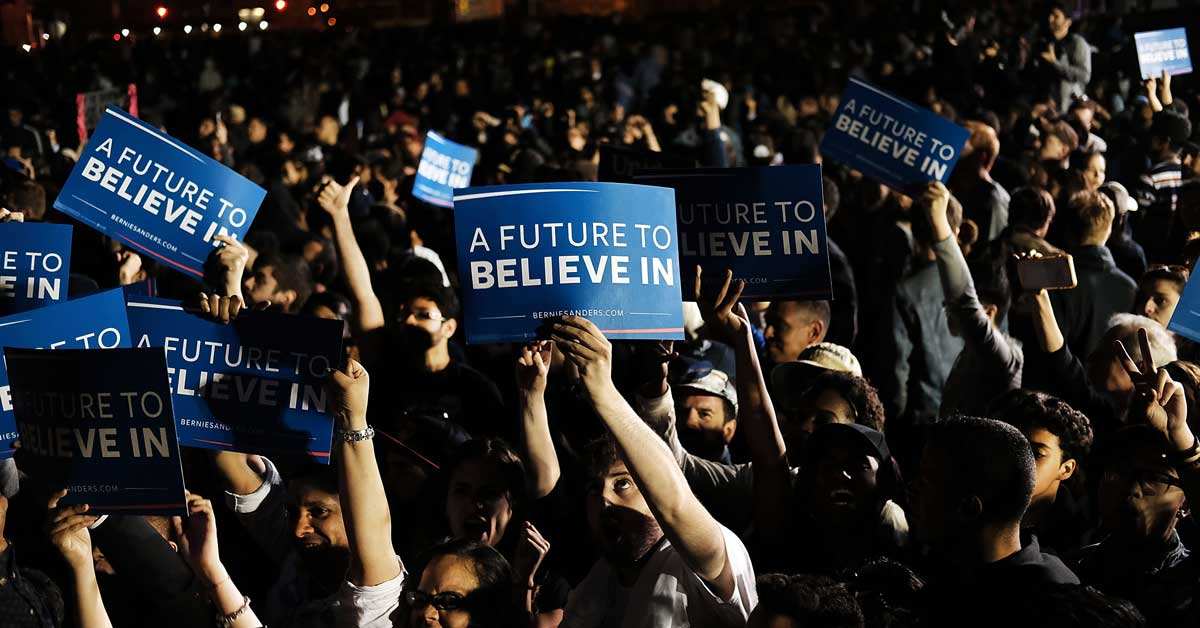
Here is a gallup poll that shows that in 2018, Democrats were more positive about socialism than about capitalism.
As someone who believes that organized labor is important for social democratic reforms, I’m not opposed to these sorts of developments in the party. But without the support of the left the democratic party will most likely return to the median voter rather than trying to appeal to the left as they did under Biden.
Anyway back to your point about your concerns being more dynamic than what the differential of the two options are. But I think that it should at least be noted the very real immediate consequences of a single election, and what it can mean to the world. Also I think I outlined some of the ways that strategic voting and other forms of advocacy can be used in tandem rather than being set against each other.

List they claimed to have for ages now officially doesn't exist.
[URL="https://abcnews.go.com/US/doj-fbi-review-finds-jeffrey-epstein-client-list/story?id=123526125"]DOJ, FBI review finds no Jeffrey Epstein 'client list,' confirms suicide: Memo
[/URL]


So the list that Trump said he would make public now doesn't exist. Pretty fishy...
It’s a fair line of inquiry. I would say there’s a big difference between not spending money that could be used elsewhere and redirecting funds that were already approved and being used for a certain purpose.
.
No this is a known fallacy, a variant of the "sunk cost fallacy". Same as if you hold an investment you wouldn't buy if you didn't own (imagine without tax considerations at play).
It is literally identical rationally to refuse to spend for X, or redirect money away from X. If anything, it's even LESS DAMAGING to redirect money from X because other people can step up in your place more easily, as you have proven it works already.
So no there isn't a "big difference" at all if we are discussing among rational people. Every time anyone in the world uses money for anything else it is literally identical to the USA stopping funding USAID life-saving interventions. Every house built, every car bought, every investment made anywhere in the world is made as an ALTERNATIVE CHOICE to helping those people in africa.
So you either attack morally every single person or institution which spends money for anything else that doesn't save the same amount of lives in identical ways, or you show a penchant for denigrating Trump in particular, making up a false moral claim that implies the USA gvmnt has a unique responsibility vs all other individuals and institutions on the planet, to help those people.
Given the USA gvmnt has helped those people already a lot, if anything that's the institution which has the LOWEST responsibility toward them having done already much more than any other one for them btw.
If i spend 500 billions toward someone then at some point i stop and you claim i am DAMAGING THOSE PEOPLE, you have a completly warped idea of reality. It's complete nonsense. I already did so much more than i had to with everyone else freeriding my contributions. Everyone else has a bigger and stronger moral mandate to intervente in my place after that (if any moral mandate to help alien strangers exist, note that i fully deny it does, i am discussing within your own moral framework).


