[extracted] New(?) 9-11 stuff
KSM got a plea deal. The guy who supposedly masterminded the 9/11 attacks is not getting the death penalty.
If you still
Ok explain this angular size and obstruction stuff like I'm 5, you like to just throw random tidbits out there like you're being all aphoristic, but I have no idea what you're referring to.
The "hull first" buffoonary is proven wrong. A foreground wave of small absolute size has a large angular size relative to the angular size of the boat. Therefore the wave may obscure the hull. The mast is observable because it has no foreground object obstructing it. Zooming in increases our resolution power, we are now able to resolve the entire image.
Furthermore, the horizon has shifted its location to an entirely different location. If the horizon is the leading edge of a sphere then it is an immutable object. Geometry does not lie. Therefore the horizon is apparent, just as I declared.
Sent from my SM-A366B using Tapatalk


Are you using the new site?
Comes up like this (using old site and on PC not phone):

You need to use the youtube tags and just place the video id inside the tag, then it should work for everyone.
The "hull first" buffoonary is proven wrong. A foreground wave of small absolute size has a large angular size relative to the angular size of the boat. Therefore the wave may obscure the hull. The mast is observable because it has no foreground object obstructing it. Zooming in increases our resolution power, we are now able to resolve the entire image.Furthermore, the horizon
Ok, let's unpick this.
1. I have no idea what "hull first buffoonery" is. Please recall that my experience in discussing flat Earth ideas is entirely limited to our discussions here, so when you introduce a new issue to the discussion, some preamble would be appreciated.
2. Saying the horizon is an immutable object is clearly just wrong, egregiously so for a semantic pedant like you. It is not an object, it is an optical phenomenon. I think we can agree that an optical phenomenon is not an "immutable object". Beyond that, you'll have to explain to me what you mean when you say it has shifted to an entirely different location and give timestamps if it relates to the video.
3. I've lost track of what this is intended to demonstrate. Is it that you can see beyond the horizon with magnification?
So is the horizon the edge of the flat Earth or what?
Does make me think though... assuming the Earth is round for a second, why is it that parallel lines meet in the same place that the curvature prevents us from seeing further? Seems like these are distinctly unrelated optical phenomena. Or do they?
Ok, let's unpick this.1. I have no idea what "hull first buffoonery" is. Please recall that my experience in discussing flat Earth ideas is entirely limited to our discussions here, so when you introduce a new issue to the discussion, some preamble would be appreciated.2. Saying the horizon is an immutable object is clearly just wrong, egregiously so for a semantic pedant like
1. Boats disappearing hull first is the first globe proof told to kiddies. It was cited by Aristotle initially I think. It is not a flat v baller nerdfest thing.
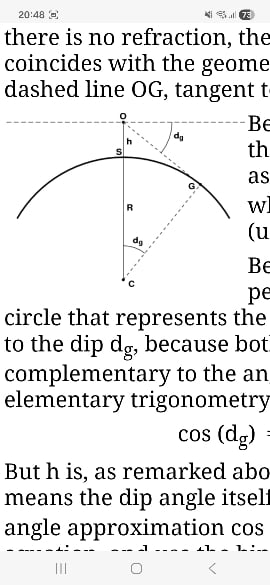
2. The horizon - a optical phenomenon. I like that. That's a flat earth claim btw. The horizon is the apex of the sphere, so goes the ball claim. See diagram. That is hard geometry. It cannot be moved.
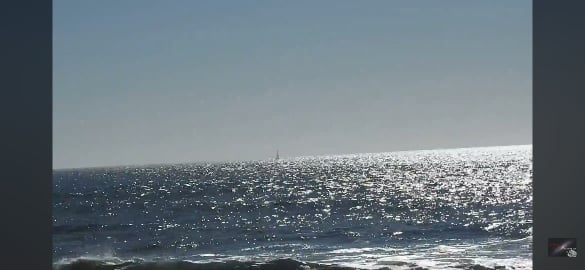
There are three horizon locations in fact. A) when the horizon is well beyond the boat. B) upon zooming out the horizon is such that the boat appears to sit atop the horizon. C) the horizon rises above the boat and conceals it.
Since the boat has not moved, only the apparent location of the horizon can have moved. We know the ball "edge" cannot move. There can be no shifting of the distance to the horizon besides refraction and observer height (ball claim), neither which have changed.
3. That the horizon is the vanishing point of perspective, or rather the series of vanishing points.
Sent from my SM-A366B using Tapatalk
"Apex of the sphere" lol. You are a very entertaining character, Billy. I would love for you to show me on a picture of a sphere where its apex is.
Obviously if it's observer dependent it's not an immutable object or an intrinsic property. Assuming for a second we treat light rays as line segments, it's just how angles and triangles work. It's not any different to the vacuous statement that you can't see around corners, it's just that this "corner" is curved.
Billy, probability question for you. If 99.99% the time boats disappear "hull first" and now and then someone manages to capture some shaky video camera footage of a boat not doing that, do you think that it's more likely that this is a). evidence for a flat earth, with the other 99.99% of instances just remaining unexplainable or b). some sort of optical effect due to rare atmospheric conditions? Answer it as a hypothetical if you prefer.
Billy, probability question for you. If 99.99% the time boats disappear "hull first" and now and then someone manages to capture some shaky video camera footage of a boat not doing that, do you think that it's more likely that this is a). evidence for a flat earth, with the other 99.99% of instances just remaining unexplainable or b). some sort of optical effect due to rare atm
What if there were no hypothetical questions? - Steven Wright

"Apex of the sphere" lol. You are a very entertaining character, Billy. I would love for you to show me on a picture of a sphere where its apex is.Obviously if it's observer dependent it's not an immutable object or an intrinsic property. Assuming for a second we treat light rays as line segments, it's just how angles and triangles work. It's not any different to the vacuous st
Vertex G in the diagram. That is the apex I refer to. That is the horizon on the ball.
Referring to the video of the boat disappearing from in front to behind the horizon: the observer height is fixed ; refraction is fixed; the only movable object is the horizon. Therefore it is not a fixed, geometric object as predicted by the globe. The horizon is apparent, it is subject to resolution power.
Like I said, a good proof.
Sent from my SM-A366B using Tapatalk
Billy, probability question for you. If 99.99% the time boats disappear "hull first" and now and then someone manages to capture some shaky video camera footage of a boat not doing that, do you think that it's more likely that this is a). evidence for a flat earth, with the other 99.99% of instances just remaining unexplainable or b). some sort of optical effect due to rare atm
We will answer very specifically. They do not disappear "over the horizon". In the video, in full zoom, if the boat was to move back to the horizon it would once again disappear "hull first", an effect of angular size and obstruction. If we zoomed further we would once more bring it into view, rescuing it from "beyond the horizon." We see this everytime.
Sent from my SM-A366B using Tapatalk
Vertex G in the diagram. That is the apex I refer to. That is the horizon on the ball.Referring to the video of the boat disappearing from in front to behind the horizon: the observer height is fixed ; refraction is fixed; the only movable object is the horizon. Therefore it is not a fixed, geometric object as predicted by the globe. The horizon is apparent, it is subject to re
Vertex G is not an apex of the sphere, or of anything else. It is the point of tangency of the unique tangent to the circle which passes through point O.
Wtf am I even looking at in that video? Dude zooms in and sees boat. Dude zooms out and can no longer see boat. What is the insight I'm missing?

As I am sure you realise, the diagram is rotated such that the horizon for that particular observer is at the "apex".
Wtf am I even looking at in that video? Dude zooms in and sees boat. Dude zooms out and can no longer see boat. What is the insight I'm missing?
Yes the horizon would be unique for each observer. There are three variables:
1. Observer height.
2. Refraction giving the effect of bending of light.
3. Position of G, the horizon, the highest point of the sphere (apex) from the observer point of view. This is earth bulge, it is hard matter.
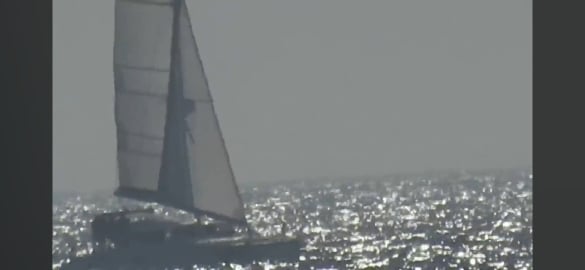
The observer height is fixed. He does not move. Refraction is fixed, time of shot is a few seconds. The only possible variation is the horizon. Ball predicts this cannot move as per point 3 above. Flat predicts the horizon is the vanishing point and hence depends on resolution power. This is why zoom function appears to move the horizon.
Image 1: horizon is far beyond boat.
Sent from my SM-A366B using Tapatalk
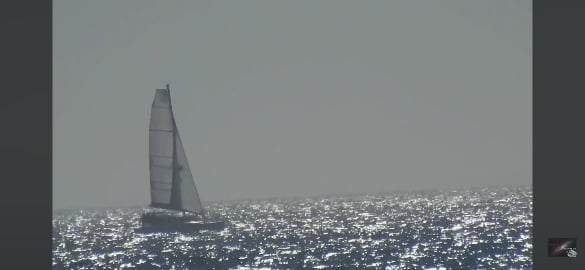
Image 2 horizon moves closer to boat.
Sent from my SM-A366B using Tapatalk
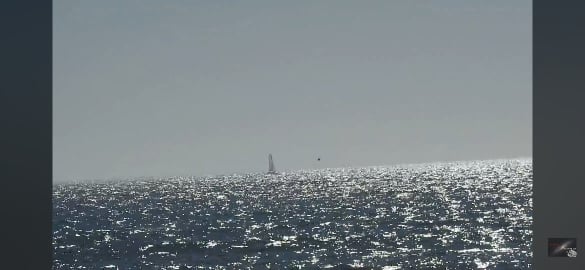
Image 3: boat sits atop horizon.
Sent from my SM-A366B using Tapatalk
We will answer very specifically. They do not disappear "over the horizon". In the video, in full zoom, if the boat was to move back to the horizon it would once again disappear "hull first", an effect of angular size and obstruction. If we zoomed further we would once more bring it into view, rescuing it from "beyond the horizon." We see this everytime.Sent from my SM-A366B us
Maybe I'm being a bit thick, but I don't understand this at all. I do know what all those words mean individually, I just have no idea what they mean in that order.
Image 4: hull is concealed by horizon.
Sent from my SM-A366B using Tapatalk
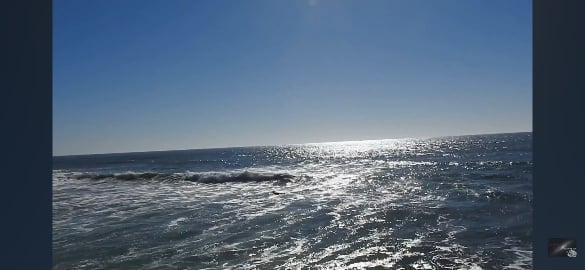
Image 5: total concealment of boat by horizon.
Summary:
1. Boat does not move.
2. Refraction does not change.
3. Observer height does not change.
4. Horizon therefore moves forward as zoom is reduced.
5. If horizon is a spherical object then it cannot move forward. Ball falsified.
Sent from my SM-A366B using Tapatalk


