1/2: AA, 3 way on river, value or checkback?
$350 eff
3 limps, H $20 CO AA, all of them call
Flop ($80): QJ4r
Checks to H $35, call, call, fold
Turn ($185): 6x
Checks to H $85, call, call
River ($355): 8x
Checks to H ???
8 Replies
All in 210 like we might with AK AT KT.
I think it is more important if the villains think that you have this hands in your range rather then you actually having them so your table image / history is important.
AK would be also not the worst combo to bluff blocking AQ and KQ i would not hate it but would go turn smaller to keep there range wider so they fast play more often sets / twopairs and i keep more weak hands in there = more fold eq on the river but probably on the 8 river i would give up because T9s will be often in there range especialy when sizing smaller on turn ( if one of the villains is a station then ofcurse not bluffing at all also not on turn wich i guess is more often the case here).
AA fine to bet bigger on the turn and i think very important all in on the river.
Yes the 8 is not amazing but if your villains call hands like KQ QT Q9 and probably they have also some AQ if they are loose passive fish so then it is a shove because you need only to have around 27% equity when called to break so even if they have 6 combos sets , 2 combos 2pairs and 4 combos straights (worst case szenario i think) they need to call at least 5 combos that you beat so as long they are not both tight and nitty regulars. (this does not include blocker effects for example if villain 1 has a top pair villain 2 has more often this nutted hands making it more likely that you run into the top range) so for that i would add 1-2 combos value that need to call you to be on the save side. And then you just estimate if it is likley if one of this players is capable to arrive to the river with this top pairs and call them often enough down.
Nice short cut in this situations is to
1. calculate how often you need to be good vs villains calling range so much eq you need
2. Just count the combos in villains range that crush you so here for example 12 combos
3. dependent on the size you bet (equity needed) calculate how many hands villain need to call that you beat to make your bet profitble.
We don't need to be perfect with this calculations but we want to have some solid foundation on which we base our decision making instead of just blindly relying on intuition
here you have a simple table that show you based on how big you bet how the ratio should be of combos that you beat and combos that you loose to.
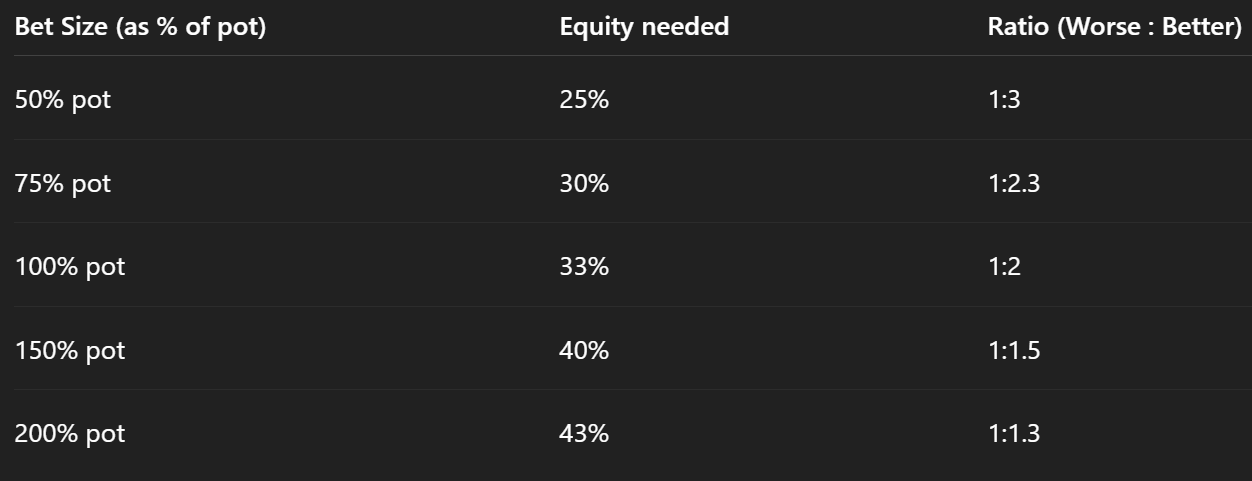
So in your example we are in between 50% and 75% so we calculate the combos vs which we loose here it is 12 combos and we devite them by 3 to know the bluff combos he needs to have when we would bet 50%. To get closer to your actual sizing (60%) we add 1-2 combos.
I like using the round numbers so 3 for 50% or 2 for 100% and estimating the in between)
If heads up might lean towards large sizing, 3 ways unlikely both players have a hand like KQ, QT, Q9 so it's more likely one of them has Qx and the other a draw. This is just ignoring the possibility one of them slowplaying 44 or QJ. The only two draws are T9 and KT and T9 is the nuts.
It really depends on your reads of the players. Some players love to trap. Some players will pounce on a weak river thin value bet.
yep i’d just check behind. once two people call turn, your hand turns into a bluff-catcher. live 1/2 players never check 2 streets then fold river. feels like QJ/QT/sets way more than Q9 or something.

Seems relatively close, I don't have a strong opinion.
Targeting a kq/aq/qt would be reasonable but are opponents limp calling kq and aq?
T9 gets there, QJ was all ready there. Fishy villains may have other 2p combos and sets.
If villain ranges are weak, Hero may do better with a smaller value sizing than jam; maybe get called by some Jx if you bet $85 again or something.

Any reads? Against the average loose/passive, just check back. They aren't folding better and they are rarely calling with worse.
If I bet, it's small -- like $50. They might call w/ a worse pair; if they call w/ two pair, etc., so be it; if they shove, you can easily fold.
Some reads might be helpful. Are these guys sticky post? Like to chase their draws? Really trappy?
Grunch:
PRE - seems fine. The fact they all called makes me wonder if we could raise larger.
FLOP - I don't love this c-bet sizing when we're so multi-way and get this somewhat connected board texture. I think we're better off betting smaller or checking back. Occasionally we can bet really big on certain flops, but this isn't one of them.
My reasoning is that our opponents could have QJ or 44 that will flat call when we bet big or check raise when we bet small. When we bet large, opponents will trap more, especially from earlier positions. We're also not really denying that much equity when their good draws will mostly call even a 1/2-2/3 pot bet.
TURN - honestly I'd be nervous that our flop bet got two callers, so I'd probably just check back and look to bluff catch most rivers.
Since we haven't really capped our opponents yet, I suppose a smaller bet is better than a larger bet, so this sizing seems okay. It would be better if we were deeper, so that we'd have enough left behind for a chunky river bet.
RIVER - some straight draws got there, and we're still losing to 2P+. Our hand isn't really strong enough to get three streets of value, so I'd probably just check it back.

