In other news

In the current news climate we see that some figures and events tend to dominate the front-pages heavily. Still, there a

Banning books also isn't a left vs right thing. Decades ago lefties were banning Huckleberry Finn, for example.
Ah yes the old equivalent principle of banning couple of books equal to banning hundreds of books …

Anyway, they're also responsible for removing "problematic" and "outdated" language from the works of P. G. Wodehouse, Roald Dahl, et al.[/URL]
But sometimes the results are quite amusing.
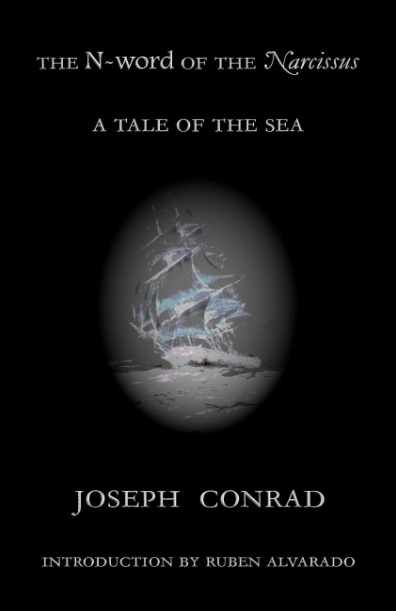
Ah yes the old equivalent principle of banning couple of books equal to banning hundreds of books …
I don't know what you're talking about. Is there a Registry of what books have been banned from school libraries, and whether or not the books were banned at the behest of Lefties or Righties?
The desire to ban or censor stuff often makes for strange bedfellows (so-to-speak).
For example,in the 1980's, Feminists and the Moral Majority both favored banning (or at least heavily censoring) pornography.
I don't know what you're talking about. Is there a Registry of what books have been banned from school libraries, and whether or not the books were banned at the behest of Lefties or Righties?The desire to ban or censor stuff often makes for strange bedfellows (so-to-speak).For example,in the 1980's, Feminists and the Moral Majority both favored banning (or at least heavily c
Again…
AI Overview
In the 1980s, both feminist and conservative groups in the U.S. advocated for banning pornography, though they did so for different reasons. Feminists argued that pornography violated women's rights, treated them as subjugated, and created a culture that normalized sexual violence. They also linked it to sexism and sexual oppression. Conservative intellectuals agreed on the need to ban pornography, but often based their arguments on moral and religious grounds. The Heritage Foundation, a conservative think tank, also played a role in shaping policy during this period. Additionally, some groups like Moms for Liberty sought to ban books they considered inappropriate, including those dealing with sexuality.
Why am I not surprise the pro liberty « The Heritage Foundation » is mention ….
Republican always defends liberty they like but not liberty for all …
Banning books fits right in …
Anyway to believe the republican are equivalent to the democrats is the fashion of this era shrug.
Ah yes the old equivalent principle of banning couple of books equal to banning hundreds of books …
Book bans and aren't a left vs. right issue even if one side engages in them more — something that's always subject to change. It's about freedom of expression, and the assertion that Team A is worse than Team B is a nonargument and a tool for dismissing any wrongdoing on the part of "your side." In doing so, it effectively gives Team B free reign to engage in censorship because no one on their side holds them accountable. In recent years, we've seen publishing companies bend to the will fervid leftwing activists to the point where they've rewritten editions of classic literature in order to remove language they deemed offensive, deciding what kind language is acceptable for others to read. In some ways, this is worse than outright bans. When a school library bans a book, that book is still available at public libraries and bookstores, but when the market is flooded with politically correct counterfeit versions of the real thing, not only is it a slap in the face to the author and writers everywhere, but after a while, people are reading forgeries without even knowing it. Left unchecked, who knows how far it could go.
Public school boards have some authority to decide what books are in their libraries, and while there are prerequisites for removing them, it's no less of a crime, legally speaking, than privately owned bookstores taking books off their shelves for ideological reasons. We don't hear the left argue about how speech has consequences or that the author of Gender Queer should be less provocative if she doesn't want to deal with the backlash.
While it does seem to have slowed down, over the last ten years or so we saw a huge attack on free speech principles from the left that reached far beyond books. They hyper-politicized everything, promoting radical ideas relative to the broader cultural norms, and anyone who wasn't on board was a bad person, many deserving of mob attacks that got them fined or fired from their jobs. On college campuses, it appeared to be a duty to shut down speakers like Jordan Peterson and Ben Shapiro from events they were invited to speak at. They had no problem with the idea of Facebook censoring discussions about the COVID lab leak theory, but would they have been so willing if they weren't allowed to discuss Russian collusion? (Don't get me wrong. The right is just as hypocritical. They argued in favor of having a free speech social media platform, but when X started banning journalists and handing out infractions for comments, they were largely silent and seemed more than happy to have a place for their team rather than a free one.) The irony of it is that it's a big reason Trump got re-elected, whether they're willing to admit that to themselves or not.

Book bans and aren't a left vs. right issue even if one side engages in them more — something that's always subject to change.
Uh, no. If the right engages in book banning substantially more frequently than the left, it's kind of fair to say this is a partisan issue.
It's about freedom of expression, and the assertion that Team A is worse than Team B is a nonargument and a tool for dismissing any wrongdoing on the part of "your side."
No, it's actually a statement of fact. The people dishonestly tossing out bad faith "both sides are bad" takes are actually the ones dismissing wrongdoing on their side.
Public school boards have some authority to decide what books are in their libraries, and while there are prerequisites for removing them, it's no less of a crime, legally speaking, than privately owned bookstores taking books off their shelves for ideological reasons.
You can slap on as much sophistry as you like, but government banning a book is obviously a different kettle of fish from a privately-run business choosing not to stock a book.

While it does seem to have slowed down, over the last ten years or so we saw a huge attack on free speech principles from the left that reached far beyond books. They hyper-politicized everything...
Notice how he breaks character here? After all that blather about how censorship isn't a left vs right or a Team A vs Team B kind of thing, we now hear that actually censorship is coming from the left. Curious!

Trolly I think people are misled by your name. You're clearly one of the best posters here.
Must we do this?

Book bans and aren't a left vs. right issue even if one side engages in them more — something that's always subject to change. It's about freedom of expression, and the assertion that Team A is worse than Team B is a nonargument and a tool for dismissing any wrongdoing on the part of "your side." In doing so, it effectively gives Team B free reign to engage in censorship
You seem somewhat ignorant on what books have been sanitized, why they were sanitized, and how prevalent the sanitized versions really are.
Its incredibly clear to me that you are simply a biased right winger waxing on about non-partisanship while slanting your message as distinctly anti liberal
I don't know what to do about this paradigm where a liberal does something and right wingers are able to effectively attribute the actions of an insignificant handful of liberals broadly across all Democrats and the Republican administration will do constant horrific things that somehow no right wingers own.
Its a paradigm where Dems are constantly walking on egg shells and on the defensive while Republicans have zero accountability. Its a big problem
What if a big reason Trump got reelected is that "centrists" are more racist and anti trans than they would ever care to admit so now they are on this "blame the libs" kick because introspection into how racist and bigoted one might be is a lot harder than being ******ed
Notice how he breaks character here? After all that blather about how censorship isn't a left vs right or a Team A vs Team B kind of thing, we now hear that actually censorship is coming from the left. Curious!
You seem somewhat ignorant on what books have been sanitized, why they were sanitized, and how prevalent the sanitized versions really are.
Its incredibly clear to me that you are simply a biased right winger waxing on about non-partisanship while slanting your message as distinctly anti liberal
I'm no right-winger, that's for sure — rickroll seems to have dealt with similar mischaracterizations, in that criticism of a certain kind of leftism means you're basically MAGA — but there's little reason to make the case that conservative led book bans aren't in our best interests since most everyone here seems to agree on that, but pointing out that the left has led censorship campaigns seems worthwhile. What books have been sanitized and why isn't the issue.
Furthermore, mentioning that the left has calmed down isn't breaking character, but it is worth noting. They widely engaged in censorship for nearly a decade. It's something they have to admit to, and acknowledge the consequences of, so it doesn't happen again. Chances are that a lot of them "forgot." There wasn't an uproar from lefty activist types when the NAACP called for public schools AND public libraries to ban a handful of Dr. Seuss books, nor did they seem upset when the pressure amounted to the publisher allowing those books to go out of print. When a California school district banned books for racism, there were leftist activists supporting the decision, and rather than calling them out, others on their side were often silent or went "Yeah, but the other side is worse" and basically dismissed it as a problem. That kind of behavior emboldens the both "sides." Of course the right has been more active when it comes to public school book bans, but Trolley missed my point about the fundamental principle of free speech and how it extends far beyond school libraries. At the risk of expedience, I'll cut-and-paste from someone smarter than me.
But while drifting in this sea of passive dolefulness, I was following the story of Count Dankula’s sentence (a criminal conviction and an £800 fine for posting an off-color joke), the British teenage girl who was convicted of a hate crime and fined £500 for posting hip hop lyrics to Instagram, and the case of the Fresno State professor who tweeted some cartoonishly impolitic things about the departed Barbara Bush and became a target of the customary internet campaign to get her fired from her job in retribution.
To me these all seem to be very much a part of a more general trend toward intolerance and illiberality that is evident pretty much everywhere you look these days, tiny, perhaps insignificant features of a map that is only obviously alarming when you zoom out far enough to see how cluttered it is. (And I’m aware that many good, smart, right-thinking people just don’t see it. I think they’re wrong, they think I’m wrong, and they often accuse me, in effect, of agreeing with my own opinions. And, on that score: guilty as charged.) ...
So Dankula avoids jail but is fined £800 — but at least he now has a lucrative career as an internationally famous free speech martyr celebrity. (And he may well be vindicated on appeal, as he should be.) This girl probably won’t be able to monetize her prosecution for quoting song lyrics on Instagram, nor is any kind of appeal likely. People generally find this crazy, but then say something like, “well, it’s only money.”
This is how people lose their rights, by tacit, passive acquiescence borne of relief it’s happened to someone else, a fine here, a prosecution there, an irrational standard of propriety capriciously applied to random scapegoats, a chilling effect on everyone else: the death of a thousand cuts.
Thank God we still have the 1st Amendment. (Though private “mobs” perform a similar function here nonetheless.) As we see, the alternative is dystopia.
To me the lesson of that lady who tweeted the mean things about Barbara Bush is not that some self-styled free speech advocates can be hypocritical when their own tribe is maligned, and therefore the argument for free speech is tainted; it’s that no matter what kind of tribe you’re in, you don’t want other people deciding whether or not what you say should be permitted or subject to penalty, that you will always have opponents willing to make the offense claim against you, and that the only way to ensure that your own freedom of expression doesn’t depend on the subjective judgment of people who dislike you is to take subjective claims out of the equation entirely and just allow people to say what they want across the board. Even then it’s a precarious balance because people in mobs are fundamentally irrational and when they think they’re winning they believe they will be in charge forever and can afford a little terror here and there without too much risk of things turning back on them. But of course they’re wrong about the permanent winning, plus, in the matter of freedom of expression there is simply no other way to do it because you can’t trust anybody.
nb. I’ve never been able to understand, quite, how so many of the world’s oddballs welcome the opportunity to participate in conformist mob attacks with such enthusiasm, apparently forgetting entirely their “lived experience” that oddballs don’t tend to fare too well out in the general population.
Finally this is from that blog post about Charlie Hebdo:
…but this gets to another more general matter, which is the attitude toward free speech of people in my own cultural reference group (blue state urban well heeled stuff-white-people-like San Francisco types who self-flatteringly like to call ourselves “liberals” from time to time.) Basically, we tend to be a lot like Francine Prose’s essay when it comes to free speech. Our support for it tends to be rather… “soft.” And by that I mean: grudging, equivocal, contingent — in essence, it kind of seems like we don’t really mean it. I notice it whenever this topic comes up in social media and I’m stupid enough to argue about it there (and I’m sure it’ll come up if I ever post this, in which case I’ll probably be stupid enough to argue about it all over again.) Of course I’m in favor of free speech, but… the line describing what “free speech” means tends to be drawn very tightly and narrowly, with manifold exceptions and caveats that take the ideal of “disagree with what you have to say but defend to the death your right to say it” and poke it full of so many holes that pretty much anything can get through.
Two tacks stand out. One might be called legalistic: the notion that “free speech” has no intelligible meaning outside the bounds of the U.S. Constitution’s First Amendment. If the Constitution doesn’t literally prohibit it, it cannot, by definition, be an encroachment on, nor in fact have anything whatsoever to do with, free speech. And, in fact, if you say “free speech” when you mean anything other than speech protected by the First Amendment from government restriction, you’re obviously an ignorant birdbrain. So, problem solved, next topic.
This is manifestly absurd to me, for a host of reasons, but people argue the case so fervently that I have to assume they must genuinely disagree with me, crazy as that may seem. (I think this, perhaps, originated as a displacement whereby the argument that the First Amendment only protects speech from government suppression — quite true, and often necessary to point out — is applied unreflectively to the greater notion of freedom of expression. This then has become reified into a token that can be played without regard to whether it literally applies, as in, say, the question of freedom of expression in other countries, the Rushdie fatwa, or in cases where speech is suppressed or punished by some other means than the government literally sending in tanks or rounding up dissidents and the like.)
The other tack is related but much broader and more worrying, in part because it is, unlike the legalistic one, literally true. “Speech has consequences,” it goes. Of course, you’re free to say anything you like, but if it doesn’t pass muster prepare for punishment. This is brought up when the subject is social media campaigns to get this or that person, say, fired for expressing an unpopular opinion. Of course it is quite true that speech, like everything else, has consequences. And there’s no law, per se, against trying to organize mass harassment campaigns to get someone fired for holding an unfavored opinion. Nor should there be, unsettling though it often is in practice: the remedy for speech you don’t like is more speech, and social pressure of that kind falls into that category.
But that doesn’t mean it doesn’t bear on the issue of freedom of expression, and it certainly doesn’t mean it’s a good idea. Tolerance is a two way street. You voluntarily allow people the freedom to express opinions with which you disagree because you realize there may come a time when you will want to expect the same from them in return. Free Speech requires tolerance, in law and in society. And tolerance is a moral ideal that can be rather hard to live up to, but I don’t think you can truly claim to be in favor of free speech if you don’t accept and aren’t willing to defend it. Tolerance only for things you like is not tolerance, but rather its opposite.
I see these two tacks, the legalistic and the social, as complementary attempts to make a kind of “end run” around tolerance. (Always in a good cause, of course — so many unsavory things have been visited upon the world by well-meaning people in a good cause.) But the question arises, then: why do they do it? I think it has to be because they really do feel that some speech should be suppressed and punished for the good of the collective and would like to reserve the right to practice intolerance when they feel it necessary without being accused of illiberality. Of course they draw the line at murder; they presumably also draw the line at tanks in the streets and gulags full of dissidents. But there are other ways to police unpopular opinions, and there the line can be drawn in such a way as to provide quite a bit of wiggle room. And this is where “my” people seem to like to draw it.
Well, my view is that that wiggle room’s “space” should be of concern to any writer or artist, any person really, who is not utterly confident that his or her speech or art will always meet with general approval or endorsement. (In fact, I think that kind of misplaced confidence underlies a great deal of the discourse in this matter.) “My” people seem to have no trouble seeing this logic when it comes to campaigns to ban or restrict access to books they or their friends have written — no one tells Sherman Alexie: “speech has consequences man, maybe write a less controversial book next time?” And everyone understands that this matter concerns freedom of expression, despite the absence of tanks in the streets. Further, Salman Rushdie’s death sentence is no less serious, nor less “free speech related,” because the First Amendment doesn’t happen to protect him from it.
When defending an ideal, you have to go all in. The line that you think murder went too far but that some other punishment might well have been in order is not a defense of free speech. It is its opposite. If you’re a writer or artist, the idea of punishment for art should be anathema...
Notice how no one on the left ever has to lie about their politics in this way? The whole tired "guys I'm no right-winger but here's but here's why the left is responsible for book bannings" act is exclusively something we see from right-wing dipshits.

Notice how no one on the left ever has to lie about their politics in this way? The whole tired "guys I'm no right-winger but here's but here's why the left is responsible for book bannings" act is exclusively something we see from right-wing dipshits.
right, when I think of Dems and their supporters honesty is one of the first things that comes to mind. lol jfc.
I'm no right-winger, that's for sure — rickroll seems to have dealt with similar mischaracterizations, in that criticism of a certain kind of leftism means you're basically MAGA — but there's little reason to make the case that conservative led book bans aren't in our best interests since most everyone here seems to agree on that, but pointing out that the left has
Again, you are just showing a distinct ignorance on the subject.
The Dr. Seuss estate decided to stop printing the books because they personally found them to be not worthy of the Seuss legacy. Similar to Dahl's family estate.
A small handful of individuals pressuring a school district to remove a book from the required reading list isn't the same as "banning" a book. Getting a book removed from a grade school library isn't "banning" a book either. There largely is no such thing as a "banned book". The closest thing would be the online PDF known as "the anarchist cookbook" which isn't really a book and is just a collection of online lore.
I don't generally agree with sanitizing literature and most of the books removed from schools largely shouldn't be, but you are just buying into a bunch of nonsense and blaming libs
And people like Rick spend the mass majority of their efforts pushing against liberal ideology that they don’t agree with then complain when people point out that they spends the mass majority of their effort pushing right wing ****
It’s a feature, not a bug
This lets them play the victim and further justify their “see it’s the libs fault” nonsense
The only guarantee in this world is that the world will change. What was will no longer be and what is won’t resemble what was
Again, you are just showing a distinct ignorance on the subject.The Dr. Seuss estate decided to stop printing the books because they personally found them to be not worthy of the Seuss legacy. Similar to Dahl's family estate.A small handful of individuals pressuring a school district to remove a book from the required reading list isn't the same as "banning" a book. Getting a
This started with Gorgo mentioning how conservatives are banning books and geezer's response when I decided to chime in with some thoughts. I understand that books aren't banned at the national level, but given your seemingly indifferent attitude about schools banning them, I'm not sure why we're even talking. If that's how you feel, is Gorgo overreacting?
Nonetheless, your response is what I'm talking about — and this isn't meant as a personal attack. You seem to be arguing in good faith unlike some other posters, but it does illustrate my point — Rather than admit that the NAACP calling for Dr. Seuss to be banned in schools and public libraries is an attempt at censorship from the left, it's ignored, and excuses are made for the Roald Dahl edits. Of course the political climate and pressure from the left to use therapeutic language played a role in this sort of thing. The Roald Dahl Story Company (recently acquired by Netflix who denied involvement) and Puffin worked together with a group called Inclusive Minds to edit his works. They used 'sensitivity readers.' The idea that Dahl's grandson and Puffin had the final say doesn't refute my point.
What if a big reason Trump got reelected is that "centrists" are more racist and anti trans than they would ever care to admit so now they are on this "blame the libs" kick because introspection into how racist and bigoted one might be is a lot harder than being ******ed
Given his incredibly low approval rating, it seems to me that most of those centrists are just starting to notice the racism and what have you and don't like it. It's important to not casually throw terms like racist and anti trans around. That's another reason we're in this mess. If someone is opposed to illegal immigration and sees a huge influx while an administration remains more or less silent on it for an entire term, and then decides to vote for the guy who says he's going to stop it, it doesn't mean they don't like Latinos. That's not even taking into account that they were likely hoodwinked by a ton of propaganda. If you want to understand why people voted for Trump, you have to try to see things from their perspective. In many cases, it's not because they're racist but living in a different reality, and right now, some of them are probably in denial.
The NAACP is not "the left." Just because a group may lean left in their ideology does not mean they represent the left wing with their actions. The desire to ban Dr. Seuss books was absolutely not a desire of any significant portion of the left wing at any point. It was a fringe idea put forth by one group. That's distinctly different from what the right wing does.
I'm no right-winger, that's for sure — rickroll seems to have dealt with similar mischaracterizations, in that criticism of a certain kind of leftism means you're basically MAGA — but there's little reason to make the case that conservative led book bans aren't in our best interests since most everyone here seems to agree on that, but pointing out that the left has
The difference is that the wokism isnt in power while maga is .
So yeah the damages are far more accountable on the right then the left ….
And that goes for a long period in many states …..

The NAACP is not "the left." Just because a group may lean left in their ideology does not mean they represent the left wing with their actions. The desire to ban Dr. Seuss books was absolutely not a desire of any significant portion of the left wing at any point. It was a fringe idea put forth by one group. That's distinctly different from what the right wing does.
Is your argument that "the left" isn't in ideological lockstep but that "the right" is? If so that's going to be one of the dumbest things you've ever posted and you post lots of dumb stuff.


